In an era defined by environmental urgency and food security challenges, a transformative agricultural vision is being realized through the development of cutting-edge, climate-smart farming systems. This ambitious initiative—championed by one of the region's most forward- thinking investors—seeks to combine innovation, sustainability, and scalable impact to redefine food production in arid and semi-arid environments.

At the heart of this movement is a proprietary smart farming infrastructure designed to dramatically reduce water usage while increasing crop yields. Utilizing advanced water recirculation technology, vertical hydroponic systems, and AI-powered automation, this agritech ecosystem eliminates the dependency on chemical fertilizers and pesticides. Instead, it nurtures plants with precision-balanced nutrient solutions in a closed-loop system that recycles up to 95% of water used.

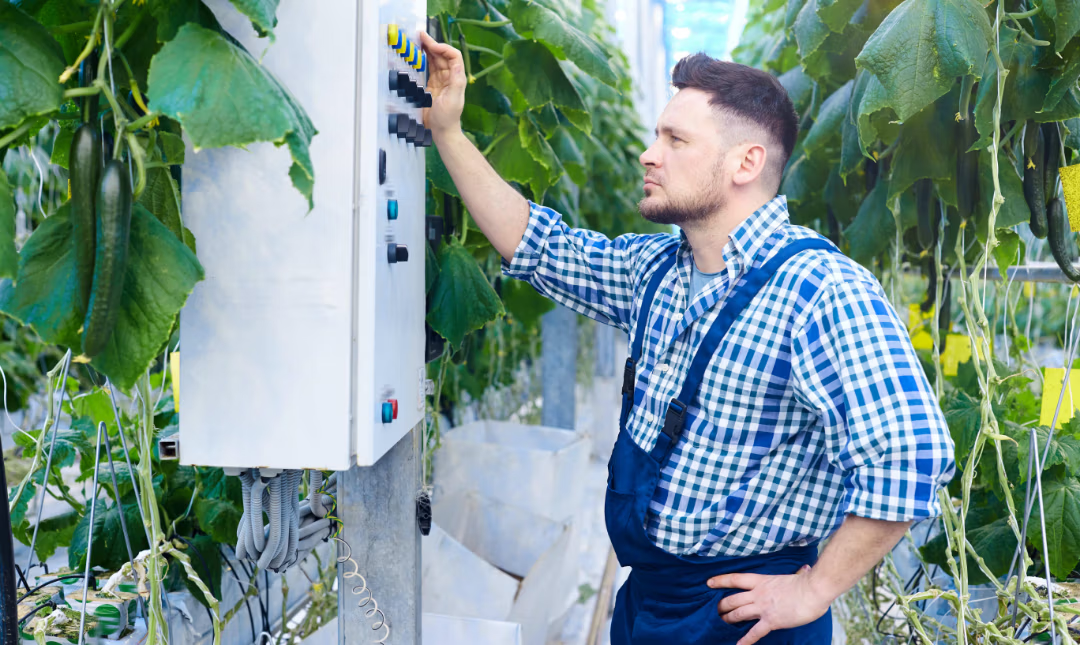
This technology is not only sustainable—it is replicable. By integrating IoT sensors, cloud-based analytics, and real-time environmental monitoring, the platform ensures that every variable— light, humidity, pH, and temperature—is optimized to achieve the highest efficiency and quality. The result: organic-grade produce, grown faster, with a fraction of the resources traditional agriculture demands.

This new generation of smart greenhouses is modular and scalable, allowing rapid deployment in diverse geographies, from deserts to urban rooftops. These units are designed for local governments, communities, and agripreneurs seeking to secure food independence while reducing their carbon footprint. By growing closer to consumption points, the model minimizes logistical emissions and delivers fresher, healthier produce to market.

The project further demonstrates a deep commitment to knowledge transfer and local empowerment. Training programs and data dashboards allow users to learn, adapt, and improve their production systems based on actionable insights, fostering a new wave of tech-savvy farmers equipped to face tomorrow's agricultural challenges.

Ultimately, this initiative represents more than just a technical achievement. It reflects a philosophy rooted in ecological respect, human health, and long-term planetary stewardship. As the climate crisis accelerates, this agritech platform stands as a beacon of what is possible when visionary leadership meets technological excellence. It is a blueprint not just for growing food— but for growing a better future.